What Are the Dimensions of a 9:16 Vertical Video?
Learn what 9:16 means, why 1080 × 1920 is only one pixel size, and how cropping landscape footage affects detail in a vertical export.
Try 20–30 seconds as a first TikTok retention test, then compare similar cuts and use completion, watch time, and drop-off patterns to guide edits.
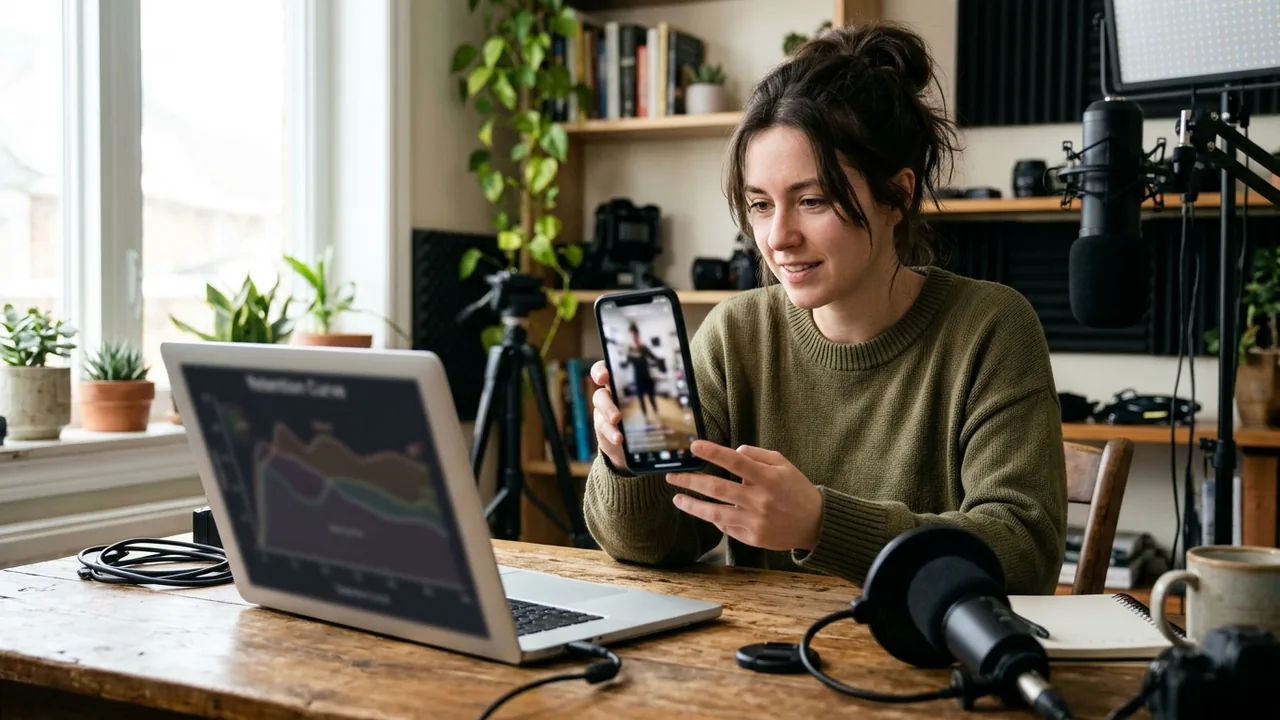
For a first retention test, try a complete, focused cut around 20–30 seconds—but treat it as a starting hypothesis, not a guaranteed optimum. Keep the hook and payoff intact, then compare similar videos or cuts using your own retention data; use the shortest length that still delivers the idea.
Completion rate, average watch time, and replay describe different viewer behaviors. Completion rate tells you what share of viewers reached the end. Average watch time indicates how long viewers watched on average. Replay suggests that some viewers watched at least part of the video again, if that signal is available in your analytics.
A short video can have a higher completion rate simply because it asks viewers to stay for less time. A longer cut may earn more watch time while having a lower completion rate. Neither result is automatically better: decide what matters for this post. If the aim is to deliver one quick answer, completion may be especially useful. If the idea needs context, watch time may help you assess whether that extra explanation held attention.
Roughly 20–30 seconds is a practical first length to test. It is not an official TikTok recommendation or a proven retention benchmark. Treat it as a working hypothesis: long enough to express one focused idea in many cases, but not a reason to force every idea into the same duration.
The right cut depends on the idea’s complexity and payoff. A single tip or clear reaction may work in less time. A claim that needs context, evidence, or a useful example may need longer. Start with the length that lets the viewer understand the promise and receive its payoff; let your comparisons tell you whether to tighten or expand it.
Use the same three checks each time you edit:
Do not remove context the viewer needs to understand the point. And do not break a sentence just to hit a duration target. A clean, complete thought is more useful than a shorter cut that leaves the meaning unclear.
To test whether a shorter or longer edit works better, make alternate cuts from the same source or topic. Keep the hook, audience, and posting conditions as similar as you can, and change length as the main variable. If one cut also changes the premise, delivery, or payoff, you will not know whether duration explains the difference.
Avoid drawing a firm conclusion from unrelated posts. A different topic or audience response can affect the comparison, even when the videos have different lengths. Look for a pattern across comparable tests, and note what changed between cuts. If you cannot use the same source, choose videos with a similar idea and structure, then treat the result as less controlled.
Look at where viewers leave, not only the final completion figure. An early drop is a reason to review whether the opening is clear and whether it delivers the promise quickly. A mid-video drop points you toward the explanation: tighten repetition, shorten a slow section, or make the next step easier to follow. A drop just before the payoff suggests that viewers may need to reach the promised result sooner.
These are editing clues, not diagnoses. Review the actual section where the line falls and check whether it contains necessary context or an avoidable delay. Consider retention alongside completion and watch time where those measures are available, and judge the change against the goal of the specific post. No single retention threshold can tell you that every video should be shorter or longer.
When repurposing a long recording, first find moments that make sense on their own: a complete answer, a clear example, or a finished story beat. Then test different maximum clip lengths against those moments. A maximum is a boundary for candidate clips, not a requirement to fill every second; keep the complete thought and its payoff even if the resulting cut is shorter.
As one optional workflow, Clipfox can turn an existing long video into sentence-complete candidate clips and let you try different maximum clip lengths. Its published test measured clip outputs, not viewer behavior: it reports clip duration and sentence boundaries, not TikTok retention or proof that a particular duration performs better. In that test, clip lengths were shortest 17.5 s (A) / 21.3 s (B); longest 67.6 s / 80.2 s; median 26.1 s / 26.6 s; 7 of 10 under 30 s and 3 over 60 s on both. Those measurements describe generated clips only; they do not show how viewers watched them.
Use the test as a way to gather candidate edits, then download the MP4 and post it yourself. Let your own comparable TikTok cuts—and the shape of their retention data—determine whether your next edit should be shorter, longer, or simply clearer.
The Clipfox team · facts checked on October 30, 2026
Learn what 9:16 means, why 1080 × 1920 is only one pixel size, and how cropping landscape footage affects detail in a vertical export.

A repeatable workflow for accurate, easy-to-read short-video captions: fix the transcript, shape phrases, check contrast and placement, then review the export.
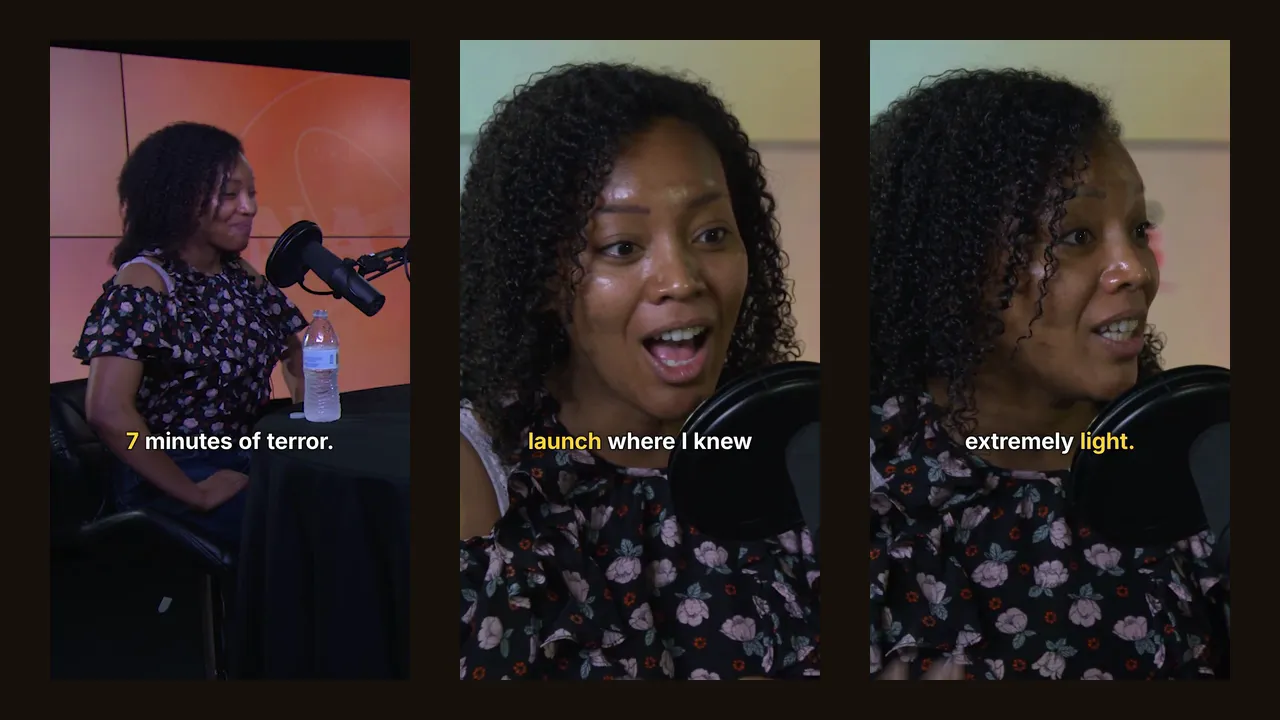
We ran a 14-minute podcast and a 29-minute live show through Clipfox. Number of clips, their length, processing time and real resolution, measured.